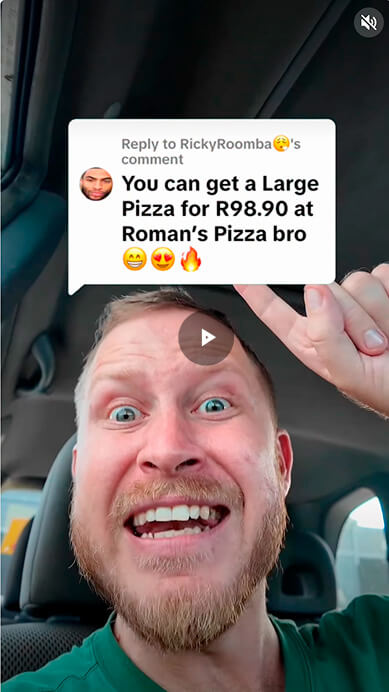
R99 meal madness how real customers made Roman's go viral

theSalt Activate mobilised a tiered army of real South African creators and everyday shoppers to buy the Feaster Deal, use it in a genuine occasion, and tell their own networks, sustained across a six-week, payday-to-payday window. The outcome: total platform saturation, a Grade A+ sentiment score, and a return on ad spend of 10.12x.
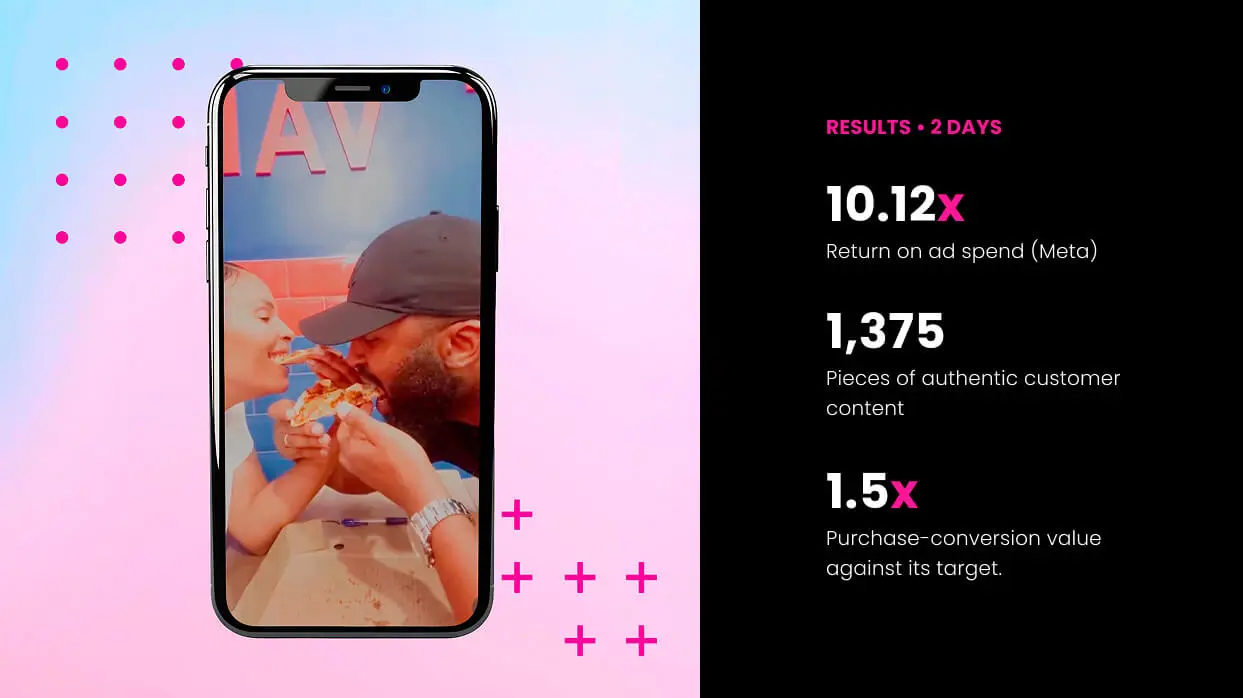
Roman's Pizza Feaster Deal customer content

problem

A value message that had to be believed, not just announced
South Africa's quick-service category is loud, promotion-heavy and deeply price-sensitive. In a tight economy, every brand is shouting "value," and a tactical offer can vanish into the noise the moment it launches.
The brief was to make the Roman's Pizza Feaster Deal land as the smart, obvious choice - not just another discount, but a deal demonstrated in real hands, in real homes, at the precise moments South Africans decide what to eat.
In a price-driven category, proximity beats reach. People believe the person next to them long before they believe the billboard.

our solution

Human voices at scale, deployed at volume

theSalt Activate ran a low-touch, scalable advocacy model engineered to convert: purchase → content → visibility → craving → demand. Real consumers bought the Feaster Deal themselves, experienced it in a genuine occasion, created first-person content, and shared it across their own feeds, groups and DMs - where peers actually make decisions.
The activation leaned deliberately into volume and frequency. A tiered mix of micro creators, nano creators and verified everyday shoppers kept Roman's Pizza constantly present across the full six weeks, anchored to paydays and weekends when the decision to order runs hottest. Demand, the strategy held, does not come from occasional visibility; it comes from constant presence.

Two simple, repeatable content routes

Route 1:

the feaster deal on its own

One large pizza from the Feaster Range at a single, unmistakable value price

Route 2:

the feaster deal with the Pepsi upgrade

The same deal, with the 2L add-on framed as the smart 'silver upgrade.'

Both routes ensured clear pricing communication, qualifying-range clarity, a strong call to action, and relatable lifestyle integration.
Goal vs Achievement
Every awareness and traffic target cleared - and the conversation owned. The full campaign completed organically in just two days. Every figure below is measured against pre-set campaign KPIs.
Return on ad spend
10.12 x
Return on ad spend (Meta)
vs. target
Authentic content created
1,375
Pieces of authentic content audited across four platforms
TikTok 35% · IG 34% · FB 31% · YT 1%
2 Days
Full campaign completed
100%
Platform saturation rate
8.8/10
Sentiment score, Grade A+
1.5 x
National awareness vs goal
2.6 x
TikTok awareness against its impressions target
2.5 x
TikTok link clicks against target, at ~2.5× better cost-efficiency than planned
1.5 x
Purchase-conversion value against its target

A note on transaction quality:

Meta order volume reached roughly 81% of its unit target, while average basket value ran well ahead of expectation — fewer orders but materially bigger baskets, which is what lifted the overall return. TikTok won on traffic volume; Meta won on transaction quality; together the multi-platform split captured the full funnel. theSalt's backend engagement and sales army added bottom-funnel support via verified proof-of-purchase uploads.

Top - performing content

Real customers, real occasions. The biggest moments were the least produced ones.
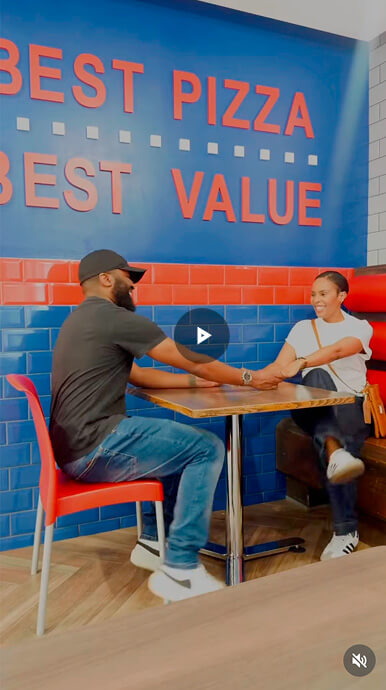
Why customer voices beat broadcast here

In a sceptical, price-driven category, proximity beats reach. When someone you actually know shows you a deal is worth it, it lands differently to a produced ad.

Customer voice marketing

  • Real, verified consumers using the product
  • Honest, first-person experience from a genuine occasion
  • Conversations happen in feeds, groups and DMs
  • Credibility compounds with volume and frequency
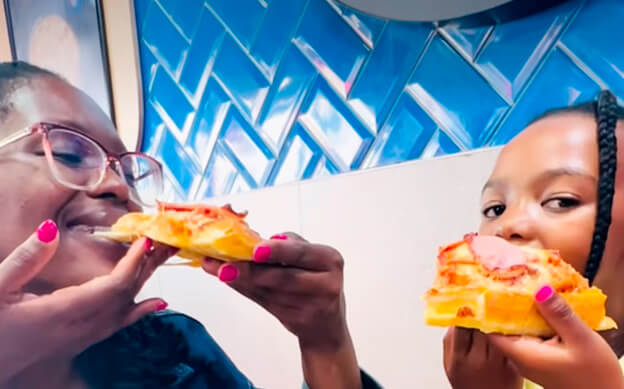
Customers enjoying Roman's Pizza together
Traditional produced advertising on a film set

Traditional category advertising

  • Brand asserts the product is good
  • Polished, produced, distribution-ready
  • Performance tied to the media buy
  • Lower trust in a sceptical category

Real purchase equals real credibility: every shopper bought the product, experienced the deal, created content from a real moment, and shared a real recommendation. That is what turned advertising into advocacy.

What customers said

Beyond reach, the clearest signal was sentiment - and the intent behind it.

90% POSITIVE 8% NEUTRAL 2% NEGATIVE

The comments showed intent, not just approval - proof that the content shortened the distance from digital discovery to a physical store visit. Just as telling was the loyalty language: customers thanked the brand for holding value "in this economy" and read Roman's Pizza as a trusted value ally, not another promotional ad.
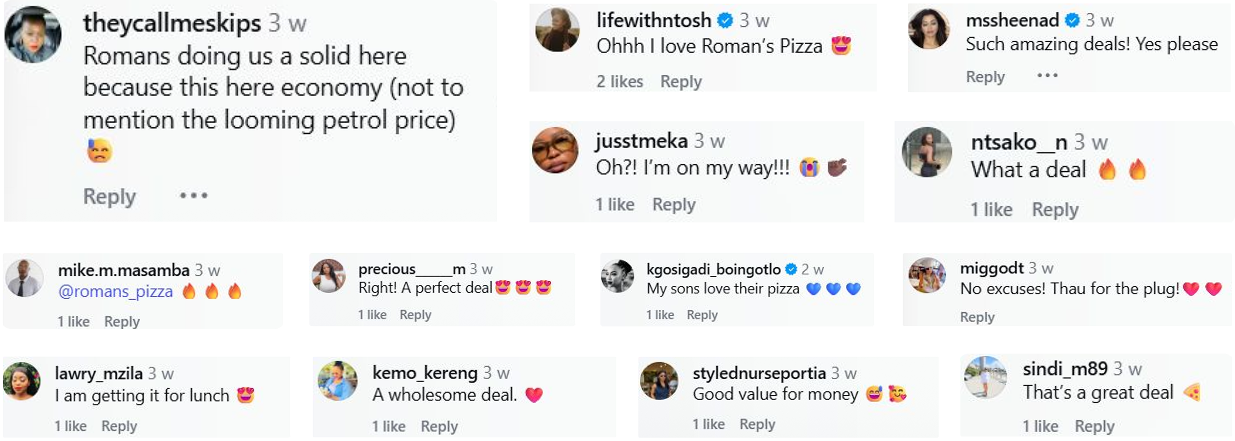
Customer comments from the Roman's Pizza Feaster Deal campaign

The takeout: a high-volume, high-frequency activation that combined authentic storytelling with peer-to-peer trust, moving people from craving to checkout.

the short story

Instead of telling South Africans the deal was worth it, theSalt let real customers prove it.
By turning everyday shoppers and creators into storytellers, Roman's Pizza converted a tactical price message into a wave of peer-to-peer proof - sustained, payday to payday, exactly where ordering decisions get made.
The result wasn't just reach. It was demand: a value promotion that cut through without a single hero ad, audited content across four platforms, and a return on ad spend of 10.12×.

KEY TAKEAWAY

Volume plus credibility turned a discount into demand.

If you're not in the conversation, you're still being talked about.

Your next campaign is already in theSalt's network

More than 700,000 real South Africans, profiled, verified and ready to talk about brands they genuinely connect with. With theSalt Activate, customer voices are accessible at a speed and price point that changes what is possible.