Why financial services brands need real customer voices at consideration and conversion: the GoTyme Bank rebrand story
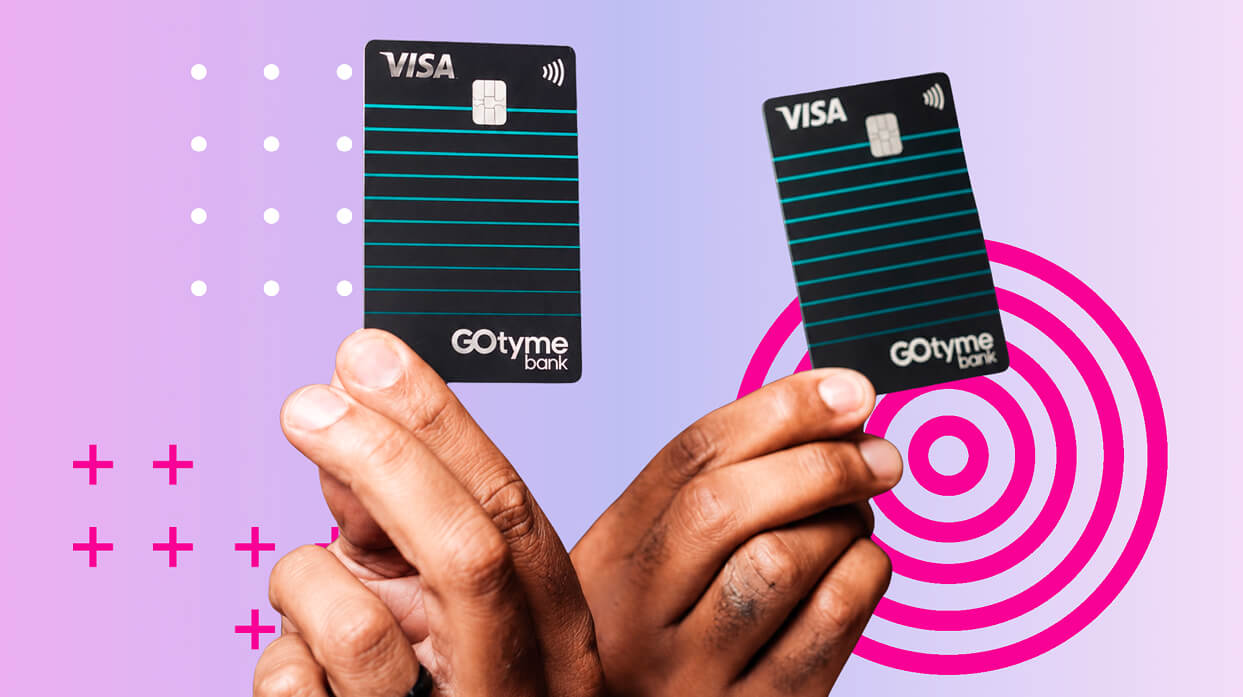
Hands holding GoTyme Bank cards during the rebrand campaign
There's a strange paradox at the heart of financial services marketing. Search for almost any bank, insurer or lender in South Africa and what comes back skews negative. Not because most customers are unhappy, but because unhappy customers are far more likely to speak up than satisfied ones. Happy customers get on with their lives. It's the dissatisfied ones who sit down and write reviews.
That silence from your happy customers distorts how your brand is perceived. In a category where trust decides everything, the distortion costs you conversions.

01

The trust gap is a financial services problem first

Financial services decisions are nothing like buying a pair of trainers. Choosing a bank account, taking out insurance, planning for retirement or applying for credit are high-stakes, infrequent and deeply personal choices. Prospects research carefully. They ask people they trust, and they look for reassurance that someone like them made the same choice and it worked out.
Scepticism runs high in this category. Consumers know brands are trying to sell them something, so they discount polished ads and celebrity endorsements alike. What they don't discount is a real person in their own network telling them, in their own words, that a product actually delivered.
That is the gap most financial services brands are not filling.

02

The funnel problem: real voices are stuck at the top

Most financial services brands do use customer stories. Look at where those stories live, though: on testimonial pages, in brand-awareness TV campaigns, in the feel-good content at the top of the funnel. In other words, in the wrong place.
The moment a prospect actually wants reassurance is not when they first hear your name. It arrives when they're comparing your product against a competitor, when they're mid-application and second-guessing themselves, or when they land on your quote page and hesitate.
Real customer voices deployed at consideration and conversion, in comparison content, inside quote flows, in retargeting creative, on post-click landing pages and in feature demonstrations, do a different job from the same voices placed in brand-love content earlier in the journey. People are influenced by people, not by brand claims, and the closer that influence sits to the decision, the harder it works.
Chat to us
Hand holding a GoTyme Bank Visa card

03

The GoTyme Bank case study: proximity beats reach

Here is what this looks like in practice.
When GoTyme Bank launched its rebrand and introduced the Instant Pay feature, the challenge wasn't awareness. It was credibility and conversion: getting real South Africans to understand that the switch was worth making, and to say so to their own networks.
theSalt Activate mobilised 60 verified TymeBank customers. Not professional creators, but real existing customers, matched to the brief through more than 70 lifestyle data points.
In their content each customer opened on the rebrand, grounded it personally with a real reason to send money, showed Instant Pay in action, then shared the content with their own network. All of it was timed to a single payday weekend, the moment money was already top of mind.
The campaign completed organically in two days. It delivered 1 755% of the organic impressions KPI, 328% of the content target and 120% of the participation KPI, with 60 customers activated against a target of 50.
The clearest signal, though, wasn't in the numbers. It was in the sentiment: real customers telling their own networks, in their own words, that the switch was worth it. When someone you actually know shows you they made the move and it worked, it lands in a way no produced ad can. That is proximity beating reach.
  • 1 755%

    of the organic impressions KPI

  • 328%

    of the content target

  • 120%

    of the participation KPI

  • 60

    customers activated against a target of 50

04

Why this matters beyond banking

GoTyme Bank is one example, but the same dynamic plays out across insurance, retirement, lending and credit. In every one of these categories, happy customers exist in far greater numbers than the negative comments online suggest. The job of marketing isn't only to generate brand love at the top of the funnel. It's to surface those happy customers at the exact moments prospects are comparing options and deciding.
theSalt has also worked with Old Mutual and Capital Legacy in the financial services space, deploying verified real customers to build credibility where it matters most: at the moment of decision, not just the moment of discovery.
GoTyme Bank
Capital Legacy — Wills & Estates Specialists
Old Mutual
The category is noisy and the scepticism is real. What cuts through is authentic human voices, placed at the right moment and matched to the right audience.

05

The data backs this up

Hootsuite's 2026 Social Trends research found that nearly one in three consumers are less likely to choose a brand that uses AI-generated ads.

In a low-trust, high-stakes category like financial services, that number deserves every marketing manager's attention.
Polished production doesn't signal trustworthiness here; it signals distance. Real, unscripted customer voices do the opposite. They close the gap between a prospect's hesitation and their decision to commit.

06

A practical framework for financial services marketers

If you want to deploy real customer voices at consideration and conversion, here is a five-step approach that works.
1

Mine your existing sentiment, not just your reviews

Your happy customers are already on record: in your NPS data, your resolved support tickets, your CRM records of long-term customers who have never complained. Start there. The raw material for authentic advocacy exists. It just needs to be surfaced deliberately.

2

Activate verified real customers instead of waiting for organic reviews

Organic reviews trickle in slowly and skew negative by default. Proactively activating verified real customers, people who have actually used your product, gives you a controlled, credible and compliant way to generate authentic content at scale. The GoTyme Bank campaign activated 60 real customers over a single weekend, which is a very different pace from waiting for reviews to accumulate.

3

Time activations to moments of high relevance

Payday weekends. Tax season. Open enrolment periods. The month before school fees are due. Financial decisions cluster around life moments, and your customer voice activations should too. Timing is a large part of why the GoTyme Bank campaign landed: real customers sharing their experience at the exact moment their networks were thinking about money.

4

Embed real customer content into comparison and quote flows, not just testimonial pages

This is the step most brands skip. Move the content downstream. Put real customer voices inside the comparison table, on the quote page, in the retargeting creative and on the post-click landing page, because that is where the decision is actually being made and where reassurance converts.

5

Use 70+ point profiling to match the right verified customers to your brief

Not every happy customer is the right voice for every campaign. A first-time account holder speaks to a prospect very differently from a long-term investor. theSalt's creator profiling uses more than 70 lifestyle data points to match the right real customers to each brief, so the content that reaches your prospects feels relevant rather than generic.

07

The bottom line

The negative noise online is not an accurate picture of how your customers feel. It's only the loudest one. Your job as a financial services marketer is to give your satisfied customers a structured, timely, well-matched way to speak up, not at the top of the funnel but at the moments that actually move prospects from consideration to conversion.
The GoTyme Bank campaign proved it in two days, at 1 755% of target. And in a category this noisy, one truth holds: if you're not in the conversation, you're still being talked about.
Want to see how this works for your brand?

08

FAQs

Why do financial services brands struggle with online reputation despite having satisfied customers?

Dissatisfied customers are far more motivated to post publicly than happy ones. This creates a skewed picture online, where negative sentiment dominates even when most customers are satisfied. The fix is to proactively activate real happy customers to share their experiences, rather than waiting for organic reviews to balance things out.

What's the difference between using customer voices at the top of the funnel versus at consideration and conversion?

Top-of-funnel customer stories build awareness and general goodwill. Consideration and conversion is where the actual decision happens: on comparison pages, in quote flows, in retargeting ads and on post-click landing pages. Placing real customer voices at those specific moments gives hesitant prospects the reassurance they need to commit.

What made the GoTyme Bank campaign effective?

Three things: verified real customers rather than professional creators, a structure grounded in a personally relevant moment (payday), and distribution through each customer's own network. The result was 1 755% of the organic impressions KPI, completed organically in two days. Proximity to the audience's own networks made the content land in a way no produced ad could replicate.

How does theSalt match the right customers to a financial services brief?

theSalt uses more than 70 lifestyle data points to profile and match verified real customers to each campaign brief. For financial services, that means matching on factors like life stage, financial behaviour and product usage, so the content that reaches your prospects feels relevant rather than generic.

Why are AI-generated ads a particular risk in financial services?

Trust is the primary purchase driver in this category. Hootsuite's 2026 Social Trends data shows nearly one in three consumers are less likely to choose a brand using AI-generated ads. In a category where scepticism is already high, polished or obviously artificial content signals distance rather than credibility. Real, unscripted customer voices do the opposite.

Can this approach work for categories beyond banking, such as insurance or retirement products?

Yes. The same trust dynamic applies across all financial services categories. Insurance, retirement, lending and credit all involve high-stakes, infrequent decisions where prospects actively look for reassurance from people like them. Activating verified real customers at the consideration and conversion stage is relevant across the full category.

How quickly can a financial services brand activate real customer voices through theSalt?

The GoTyme Bank campaign mobilised 60 verified real customers and completed organically within two days. Timelines depend on brief complexity and activation scale, but the managed service model means brands aren't building from scratch: theSalt's community of 730,000+ real South Africans is already profiled and ready to be matched.

If you're not in the conversation, you're still being talked about.

Your next campaign is already in theSalt's network

More than 730,000 real South Africans, profiled, verified and ready to talk about brands they genuinely connect with. With theSalt Activate, customer voices are accessible at a speed and price point that changes what is possible.

Albert Makoeng
Albert Makoeng
Albert is a seasoned performance Influencer Marketing expert with 16 years of experience in marketing, media, digital advertising & sponsorship. Albert has held senior positions at DStv, BBC, ESPN and led teams across 20 African markets.