

What is user-generated content (UGC)? A guide for global brands
What it means, why it outperforms traditional advertising, and how brands can source it at scale.
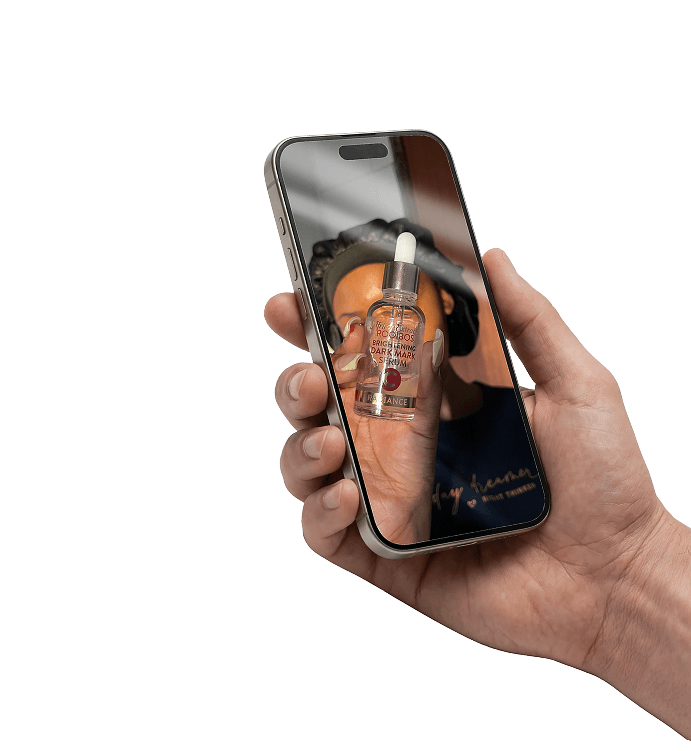
User-generated content (UGC) is any content created by real people rather than by a brand or its agency: photographs, video, reviews, social posts or testimonials. It is published in their own words, on their own channels, and it carries the credibility of a personal recommendation rather than an advertisement.
UGC meaning, and what UGC stands for
UGC stands for user-generated content. The term covers anything made about a product by the people who use it, rather than by the brand that sells it.
A brand can spend a great deal of money producing a film about how much people love its product. It cannot manufacture the moment a customer films themselves using it because they wanted to. The second is worth more precisely because it could not be bought outright, and audiences read the difference immediately.


The terms you will encounter
Several labels circulate for closely related things, and they are not interchangeable.
Why we say customer-generated content
At theSalt we work in customer-generated content, and the wording is deliberate. UGC as a category has become elastic enough to include content from people who have never touched the product: scripted, briefed, filmed to a shot list and posted by someone paid to post it. That content has its uses. It does not do the job that UGC was valuable for in the first place.
What we run instead is peer-to-peer. Real customers, sourced from a community of 600 000 South Africans, who buy the product themselves, use it, and say what they think about it on their own channels. The reach numbers, the paid-media efficiency and the approval rates all follow from that single decision about who is holding the phone.
What is a UGC creator?
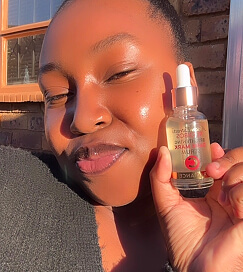
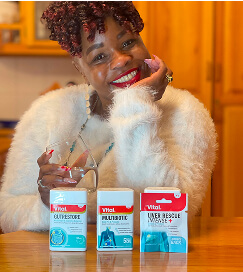
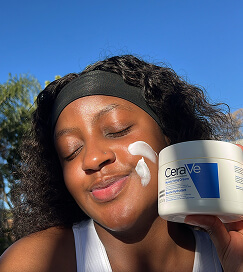
A UGC creator is someone who makes content featuring a product, either for a brand to use in its own channels or to post on their own. Most are not famous, and that is the point.
Real SA creator
2,459 followers

Real SA creator
1,000 followers

Real SA creator
2,500 followers
Real SA creator
11,300 followers
Real SA creator
2,486 followers
The profile is a long way from the influencer stereotype. UGC creators are typically everyday people with modest followings. They are students, working professionals, parents and retirees: anyone with a phone, a platform and an opinion about something they actually use. Their audiences are people who know them, meaning colleagues, classmates, neighbours and family.
That is precisely where the value sits. A recommendation from someone you know converts differently to a recommendation from someone you follow. You’re not buying reach, you’re buying proximity. Which is why follower count turns out to be a poor way to shop for advocates, and why brands that recruit for genuine product use rather than audience size consistently see better content and better numbers.



Looking to become a UGC creator yourself?
This page is written for brands. If you would rather be making the content than commissioning it, theSalt Rewards is where African creators sign up, find campaigns from brands they already use, and get paid in Rand for completing them.
Join theSalt RewardsWhy UGC works, and what it delivers
Brand advertising has a credibility problem, and it is getting worse rather than better.
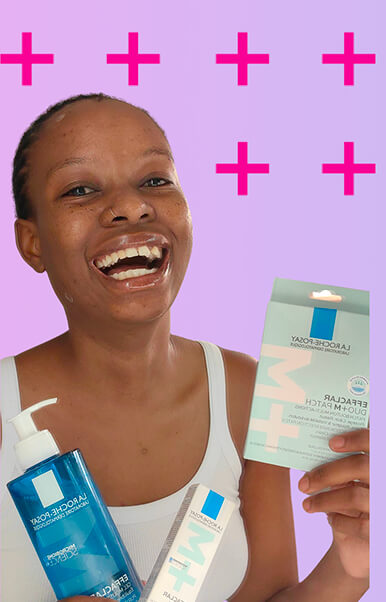


Audiences have grown fluent at recognising advertising and skilled at skipping it. Paid creator content has drifted towards the scripted and the synthetic, which has spent down much of the trust that made the channel work. Meanwhile the people whose recommendation genuinely moves a purchase, a brand’s own customers, remain the most under-used asset on most marketing plans.
UGC closes that gap. It does not perform because it is cheaper to produce, though it usually is. It performs because it is the only content in the mix that the audience did not assume was trying to sell them something.
reach increase, driven by advocates recruited from the community
CHÂTEAU GÂTEAUX
organic reach vs benchmark · 134% content pieces · 176% paid-media efficiency
I&J AIR-FRI’kn AMAZING
CPC improvement · 147% organic reach, both vs benchmark · 50× nano and 10× micro advocates
ULTRAMEL (DANONE)
organic reach vs baseline · 170% content pieces vs benchmark · 300% paid-media efficiency vs brand average
EPI-MAX BABY & JUNIOR SPF 50
organic reach · 125% content pieces · 246% paid-media efficiency. Four ready-meals launched with zero in-store sampling budget
DR OETKER NICE 'N EASY
UGC vs influencer marketing vs branded content

Where theSalt operates
TheSalt is a brand-advocate engine. The sweet spot is the overlap: the people who are already your customers, and who are already in our community.
That overlap is the group nobody else can activate for you, because reaching it requires knowing both who buys your product and who is willing to talk about it.
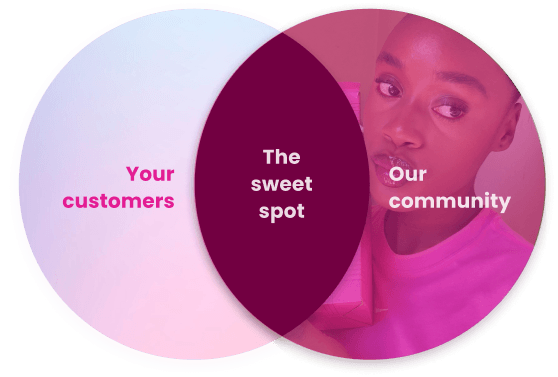
From vague reach, scripted talent and no link to purchase. To real customers of the brand, recruited from a 760 000-member community, buying and trialling the product themselves, generating authentic UGC, scaled with targeted paid media and measured against sales, content and advocacy.
The problem: good UGC is hard to get at scale
Almost every marketer already agrees UGC works. Very few have a reliable way to produce it in volume, on brief and on time. Five frictions account for most of that gap.
Sourcing at volume
One enthusiastic customer is an anecdote. Two hundred, matched to a specific profile and available within a fortnight, is a channel. Finding them is the part most brands cannot do from a standing start.
Authenticity under a brief
Brief too loosely and the content misses. Brief too tightly and you have produced an advertisement with a stranger in it. The band between those two failures is where you need to be.
Rights and usage
Content the brand cannot legally put behind paid media is worth a fraction of content it can. Rights secured after the fact are expensive, slow, and sometimes unavailable.
Consistency and brand safety
Quality varies by definition when hundreds of people are creating. Without a workable approval layer, legal and brand teams become the bottleneck that stops the programme.
Verification
Did the person actually buy it? Actually use it? Actually post? Without proof of purchase and verified completion, a UGC campaign is a set of assertions rather than a measurable activity.
How theSalt solves it
We operate a community of 760 000 brand advocates, and a platform that takes a campaign from sourcing to verified, amplified content without the brand team managing any of the middle.
Advocates are queried by profile rather than by follower count: which bank they use, which network, which lifestyle categories, which region, which language. That is what makes precision possible at scale.
The flow is low-touch and fully automated end to end. Campaigns go live in under two weeks, and a community segment can be activated within a week. Over the last twelve months we have delivered more than 300 campaigns on it, with first-time content approval running above 90%.
How to choose a UGC platform or partner
The category has filled up quickly and the offers look similar on a credentials deck. Eight questions separate them in practice.

What is the sourcing model?
Are these real customers of the brand, or talent recruited to act like them? Nothing else on this list matters as much.

Is purchase and completion verified?
Ask how proof of purchase is captured and how task completion is confirmed. If the answer is a screenshot in a spreadsheet, the programme will not survive scale.

Who owns the content, and for how long?
Get usage rights, territories and durations in writing before the first brief goes out.

How granular is the targeting?
Demographics are table stakes. Ask whether you can source by bank, network, language, region and lifestyle. That is the difference between a campaign and a media buy.

How is it measured?
Content volume against benchmark, organic reach against baseline, paid-media efficiency against brand average. Vaguer than that and you cannot defend the line item.

How fast can it go live?
Ask for time-to-live, not time-to-proposal. A campaign that takes three months to mobilise has already missed whatever it was built for.

Does it handle local compliance?
ARB disclosure and POPIA are not optional, and international platforms generally do not manage either for the African market.

Can the content be amplified?
Organic reach is the beginning. If the partner cannot put paid media behind the best-performing pieces, you are leaving most of the value in the feed.
UGC in Africa
The playbooks written for the US and UK markets translate badly here, and the reasons are structural rather than cosmetic.
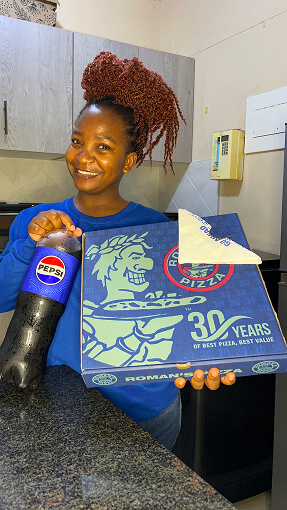
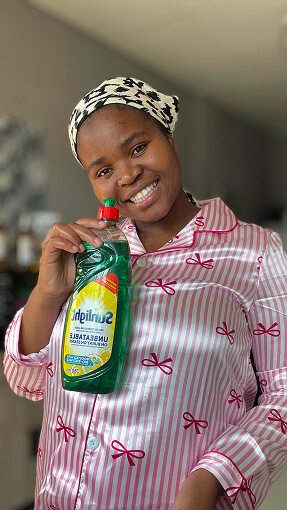
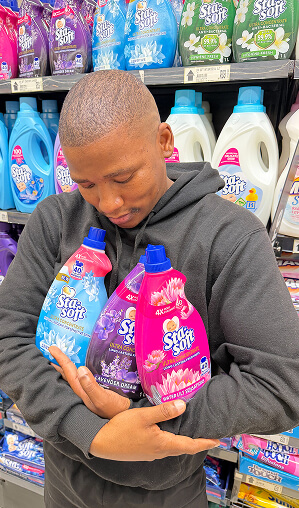
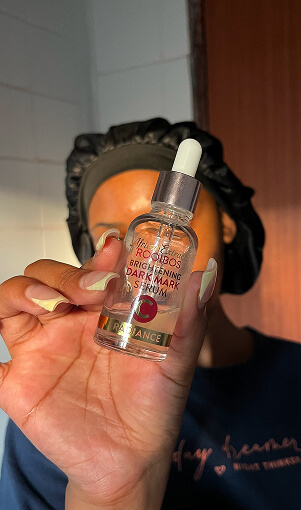
Africa is not one market, and the playbooks written for the US and Europe don’t work the same here.
The continent carries well over a thousand languages, and a campaign running in English or French alone is not running nationally almost anywhere on it. Much of the conversation that moves purchase happens on dark social, in WhatsApp groups, family chats and community pages, where no dashboard can see it and no international measurement model accounts for it. Mobile is the first screen rather than the second, and the cost of data shapes what people will actually stop to watch. Retail runs from national chains to the corner shop and the informal trader, frequently serving the same shopper in the same week.
This is where a local community stops being a nice-to-have. Sourcing advocates in the languages people genuinely use, on the platforms they actually open, with someone accountable on the ground, is not something a global tool ships with. It is built market by market or not at all.
FAQs
Group 1: The basics
Q: What does UGC stand for?
UGC stands for user-generated content. It refers to any content created and published by people rather than by a brand or its agency: photographs, video, reviews, social posts or testimonials.
Q: What is UGC content?
UGC content is content about a product or brand made by the people who actually use it. In practice that covers reviews and ratings, social posts, photography, short-form video, unboxing clips, testimonials, and answers in community and forum spaces.
Q: What makes good UGC content?
Three things, in order. It has to be genuine, made by someone with real experience of the product. It has to be specific, because detail is what makes a recommendation believable. And it has to sound like the person who made it, which means resisting the urge to brief the voice out of it.
Q: Is UGC the same as influencer marketing?
No. Influencer marketing buys access to someone else’s audience. It is a media buy with a face attached. UGC captures what real customers say on their own channels. The economics, the credibility and the way it is measured are all different.
Group 2: About UGC creators
Q: What is a UGC creator?
A UGC creator is someone who makes content featuring a product, either for a brand to use or to post on their own channels. Most have modest followings, frequently under 10 000, and are valued for credibility with people who already know them rather than for raw reach.
Q: Do you need a large following to be a UGC creator?
No. Brands running customer-advocacy campaigns generally recruit for genuine product use rather than audience size, and creators with small followings are the norm on these campaigns rather than the exception. theSalt Rewards selects on fit with the campaign, not on follower count.
Q: How do UGC creators get paid?
Payment structures vary by platform. On theSalt Rewards, creators are compensated in Rand for completing campaign tasks, and the amount depends on the campaign and what it asks for.
Q: How does someone become a UGC creator in Africa?
Sign up, get approved, find a campaign that fits products you already use, complete it properly and get paid. theSalt Rewards is where African creators do that, with no minimum following required.
Group 3: Running a campaign
Q: Who owns the rights to UGC?
The creator owns their content by default. A brand needs an explicit licence to reuse it in owned or paid media, which is why usage rights, territories and durations belong in the campaign brief rather than in a negotiation after the content already exists.
Q: How long does it take to run a UGC campaign?
theSalt activates campaigns in under two weeks, and can mobilise a community segment within a week.
Q: Can UGC be used in paid media?
Yes, provided the usage rights are secured up front. Amplifying the strongest-performing organic pieces is where a lot of the value sits. Across our four published case studies, paid-media efficiency has run between 176% and 300% against brand averages.
Q: How much does a UGC campaign cost?
Pricing is R-denominated and quoted per pilot, because cost depends on the number of advocates, the product category, the content requirement and the paid-media layer. As a category, customer-generated content costs less than traditional field teams and moves faster than in-store sampling.
Your customers
have the mic
The playbooks written for the US and UK markets translate badly here, and the reasons are structural rather than cosmetic.
Chat with us