Salt PR: how community-powered stories are replacing press releases in South Africa
theSalt Activate mobilised a tiered army of real South African creators and everyday shoppers to buy the Feaster Deal, use it in a genuine occasion, and tell their own networks, sustained across a six-week, payday-to-payday window. The outcome: total platform saturation, a Grade A+ sentiment score, and a return on ad spend of 10.12x.
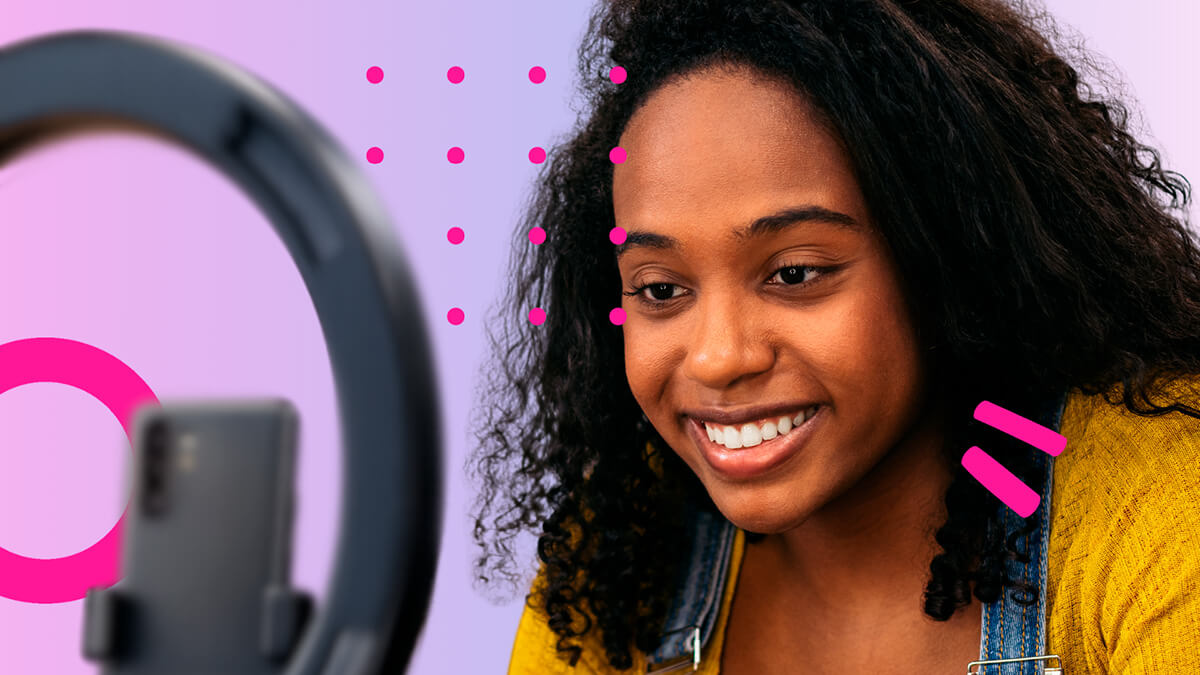
Creator filming community-powered content for Salt PR

The press release isn't dead. But it's losing ground fast.

South African brands are waking up to a hard truth: a polished media statement distributed to a shrinking pool of journalists does far less work than 500 real consumers talking honestly about your product on the platforms where your next customer already spends their time. That shift has a name. Call it community-powered PR. Call it salt PR. Either way, it's a fundamentally different way to build brand reputation and it's changing how smart marketers think about earned attention.

01 - The challenge

What traditional PR gets wrong in 2026

Traditional PR was built on a simple idea: get a credible third party to say something good about your brand, and people will believe it. The journalist was the trusted voice. The byline was the proof.
That model still works in certain contexts. But the trust architecture has shifted. South African consumers increasingly look to people like themselves, not publications, when deciding what to buy, try, or recommend. A review from a real Johannesburg mom who actually bought your skincare product carries more weight than a feature in a lifestyle supplement. Not because the journalist lacks credibility, but because the consumer is more relatable.
The problem with most brand communication today isn't the channel. It's the source. Branded content sounds branded. Press releases read like press releases. Even well-placed media coverage can feel distant from the everyday consumer's lived experience.

02 - The change

The rise of verified consumer voices

What's happening right now isn't about replacing PR with advertising. It's about replacing scripted brand messages with genuine consumer stories, told by real South Africans, in their own words.
This is different from hiring professional creators or booking celebrity endorsements. The most powerful version of this approach uses verified consumers: people who have actually used the product, experienced the service, or lived inside the brand's world. Their stories aren't polished. They aren't scripted. That's exactly what makes them work.
theSalt has built its entire model around this idea. The platform connects brands with a community of 730,000 or more vetted South African consumers and content producers, each profiled across 70 or more lifestyle data points. The matching is precise. A campaign for a budget-conscious family food brand reaches people who actually cook for families on a budget. A financial services campaign reaches consumers who match the right income bracket, life stage, and financial behaviour. No guesswork. No wasted reach.
730,000

Vetted South African consumers and content producers

Each profiled across

70 or more

Lifestyle data points

03 - The importance of social proof

Why "the community is the campaign" is not just a slogan
When you run a product sampling campaign and 300 real South Africans receive your product, try it at home, and share their honest first impressions, you're not just generating content. You're generating social proof at scale, in real time, from real people.
That content lives on. It gets shared. It gets found in search. It sits in comment threads where future buyers are already reading reviews, answering the exact questions your potential customers are asking, because the people creating it are your potential customers.
This is the mechanism behind what theSalt calls community-powered campaigns. Formats include product sampling and first-impression campaigns, UGC production, affiliate reviews, social buzz amplification, and community surveys. Each one is designed to produce authentic consumer stories rather than polished brand content.
Dr. Oetker
takealot.com
Old Mutual
epi-max

The results speak for themselves. Across campaigns for brands like Epi-Max, Dr. Oetker, Takealot, and Old Mutual, theSalt's network has produced 186,800 or more pieces of creator-generated content. That's not a vanity number. It represents 186,800 or more individual consumer touchpoints, each carrying the credibility of a real person's genuine experience.

04 - Community powered PR

How this replaces the press release function

Traditional PR aimed to achieve three things: awareness, credibility, and reach. Community-powered stories deliver all three, often more efficiently.
Awareness

Awareness

comes from volume.

When hundreds of real South Africans talk about your brand simultaneously, the noise is organic and distributed across platforms, communities, and social circles that no single media placement can reach.
Credibility

Credibility

comes from the source.

A consumer who bought your product and shares their honest reaction is inherently more believable than a brand spokesperson or a paid media partner. Amplifying that kind of social proof produces stronger trust signals than polished editorial coverage alone.

Reach

Reach

comes from the network effect.

Real people share with real people. A first-impression video posted by a Cape Town consumer reaches her followers, who share it further, and the story compounds outward without a media budget driving every impression.

The proof-of-purchase difference

One of the most important distinctions in this model is verification. Brands running campaigns through theSalt aren't working with anonymous strangers or accounts with inflated follower counts. Creators in the network are profiled and vetted. Campaigns can be structured around product sampling, meaning the consumer actually receives and uses the product before sharing their story. That's a meaningful difference from paid content with no experiential basis.
This matters for brand safety. It also matters for authenticity. When someone shares a genuine first impression, the content reads differently, it sounds different. South African consumers can tell, and they respond to it.

05 - The future

What this means for your brand's PR strategy

If your current PR approach relies primarily on press releases, media pitches, and paid placements, you're not wrong to keep doing those things. But you're likely leaving significant earned credibility on the table.

The brands seeing the strongest results in 2026 are combining traditional PR with community-powered storytelling. They're using real consumer voices to seed conversations before a product launch, sustain buzz after a campaign breaks, and build a library of authentic UGC that supports every other channel, from paid social to retail point-of-sale.


Community members connecting through a brand experience
Consumer providing feedback on a laptop

Community surveys and consumer feedback campaigns add another layer. Instead of commissioning expensive research, brands can run structured feedback campaigns through theSalt network and come away with real consumer sentiment data, alongside the content those conversations naturally produce.

06 - Local importance

Why South Africa specifically matters here

South Africa's media and marketing environment has its own character. Trust in traditional institutions, including media, has shifted. Consumers are savvy. They spot inauthenticity quickly. And they respond strongly to voices that reflect their own lives, languages, and experiences.
A community-powered PR approach built on South African consumers, profiled with local lifestyle data, and matched to campaigns by genuine cultural and demographic fit does something no global platform can replicate. It speaks to South Africans the way South Africans actually speak to each other.
That's the core of what theSalt does. No celebrities. No scripts. Just real South Africans who actually care about the products they're talking about.

07 - FAQs

Questions brand marketers ask about this campaign

What is community-powered PR?
Community-powered PR is an approach where brands generate awareness, credibility, and reach by activating real consumers to share genuine stories about their product experiences, rather than relying solely on media placements or branded content. It uses verified consumer voices instead of scripted messaging.
How is this different from traditional influencer marketing?
Traditional influencer marketing often relies on professional creators or celebrities with large followings. Community-powered PR focuses on verified consumers, real people who have actually used the product, whose stories carry authenticity because they're grounded in genuine experience, not paid performance.
What kind of content does a community-powered campaign produce?
Campaigns typically produce first-impression reviews, product experience posts, social buzz content, affiliate reviews, and UGC across platforms like Instagram, TikTok, and Facebook. theSalt's network has produced 186,800 or more pieces of this content across client campaigns.
How does theSalt match consumers to brand campaigns?
theSalt profiles creators across 70 or more lifestyle data points, including interests, behaviours, demographics, and purchasing habits. This allows the platform to match your brand with South African consumers who genuinely fit your target audience, not just anyone with a social account.
Can community-powered campaigns replace a press release entirely?
Not always. Press releases still serve specific functions, particularly for financial disclosures, formal announcements, and media relations. But for building brand awareness, generating social proof, and creating earned content at scale, community-powered campaigns often outperform traditional PR on both reach and credibility.
Which South African brands have used this approach?
Brands including Epi-Max, Dr. Oetker, Takealot, Old Mutual, VW Golf GTI, Coricraft, Club Med, Ginologist, and Close Up have all run campaigns through theSalt, with documented results across UGC, sampling, and social buzz formats.
How do I get started with a community-powered PR campaign in South Africa?
Start by booking a demo to see how the platform matches your brand to the right consumer voices. Explore campaign formats and case studies at thesalt.co.za.
The press release told your story.
Community-powered PR lets your customers tell it.
In South Africa in 2026, that difference is everything.

If you're not in the conversation, you're still being talked about.

Your next campaign is already in theSalt's network

More than 700,000 real South Africans, profiled, verified and ready to talk about brands they genuinely connect with. With theSalt Activate, customer voices are accessible at a speed and price point that changes what is possible.

Albert Makoeng
Albert Makoeng
Albert is a seasoned performance Influencer Marketing expert with 16 years of experience in marketing, media, digital advertising & sponsorship. Albert has held senior positions at DStv, BBC, ESPN and led teams across 20 African markets.