Why customer voices convert better in Q4

Q4 compresses buying timelines. See how customer generated content builds mid-funnel trust and bottom-funnel conversions ahead of Black Friday, when styled creator content falls short.

Customer voice content converting better in Q4 ahead of Black Friday
Q4 is here, and it compresses decision timelines across every category. Budgets tighten, media costs rise, and the gap between consideration and conversion narrows to days rather than weeks. For South African brand and agency marketers heading into Black Friday and the festive season, the quarter exposes a specific weakness: content that looks credible but does not carry trust.
This is where customer generated content changes the equation. Verified customers telling their own product stories move prospects through consideration and into purchase faster than produced creative, because the trust is already built in. theSalt operates as the infrastructure behind that shift, activating 730,000+ vetted South African consumers to generate scalable, authentic human proof on your brand's behalf.
This article breaks down why Q4 rewards customer advocacy over styled creator content, where those voices work hardest in your funnel, why they keep working when you put paid media behind them, and what to put in place before Black Friday media costs peak.

There is still time before Black Friday

  1. Day 1

    Brief signed

    Consumers matched by profile

  2. Under 2 weeks

    Activation live

    Verified customers post on their own channels

  3. Next

    Amplify the best

    Paid media behind approved content

  4. 27 November

    Black Friday

    Customer proof already in market

Key takeaways: customer voices in Q4

  • Star

    Q4 compresses the consideration window, making trust-bearing content from real customers more valuable than awareness-stage creative.

  • Star

    Peer review and user-generated proof now carry more purchase trust than influencer endorsements, according to Akeneo's 2025 B2C survey .

  • Star

    Customer advocacy content converts at mid-funnel because it answers the trust question that a professional creator cannot.

  • Star

    Customer content keeps its advantage in paid placements because it looks native, carries real-use detail, and mirrors the audience seeing it.

  • Star

    theSalt activates verified South African consumers from signed brief to live activation in under two weeks.

  • Star

    Building your customer content pipeline now, ahead of Black Friday, protects both budget and performance.

01 - The Q4 squeeze

Why Q4 compresses the consideration window

South African marketers know the Q4 pattern. Black Friday, festive season spend, and year-end deadlines stack on top of each other. Media costs increase, and consumers move through fewer touchpoints before committing.

The rest of the year

Weeks

Nurture sequences В· retargeting В· webinars

Prospects have time to warm up across many touchpoints before they buy.

Q4

Days

Fewer touchpoints В· higher CPMs В· faster decisions

Every impression has to carry more trust, because there may not be a second one.

In a compressed timeline, mid-funnel content has to do more work per impression. A prospect who sees your brand for the first time in November does not have the luxury of a six-week nurture sequence. They need to trust the product now, not after three retargeting ads and a webinar.
Every Q4, brands that rely on awareness-heavy content find their conversion rates falling short while brands with credible proof already in market close faster.

02 - The closing moment

Why bottom-funnel pressure exposes weak content

Bottom-funnel content exists to close. It is the final layer between interest and action. When that content is a styled brand video or a scripted creator endorsement, the trust gap becomes visible under Q4 scrutiny.
Consumers in a buying moment evaluate content differently. They look for signals of genuine product experience.
Did someone with a life like mine use this, pay for it, and recommend it?

Three signals a Q4 buyer checks, and how theSalt verifies each

Signal 01

Did they use it?

Consumers already buy the product day to day, and use it in their own context before they post.

Signal 02

Did they pay for it?

They purchase the product themselves and upload proof of receipt for every activation.

Signal 03

Do they recommend it?

They post to their own network, in their own words, on their own Instagram, TikTok, Facebook and WhatsApp.

Akeneo's 2025 global B2C survey shows growing trust in user-generated reviews over influencers in buying decisions.
For bottom-funnel in Q4, the content that closes is the content that reads as real. Styled production value does not compensate for missing credibility at the moment a consumer reaches for their card.

03 - The confusion

What brands get wrong about authentic content

Styled creator content is not customer advocacy

There is a persistent confusion in the South African market between creator content and customer advocacy. A professional creator with a curated feed produces visually consistent, brand-safe material. That material performs well for awareness and discovery.
Customer advocacy is a different mechanism entirely. It starts with someone who already buys your product in their day-to-day life. theSalt identifies these consumers through surveys on its platform, so the people speaking for your brand are existing buyers, not recruits meeting the product for the first time. For the activation, they purchase the product themselves and upload proof of receipt. The content is produced by someone whose audience knows them personally, in a setting that looks like real life because it is real life.

Customer advocacy

Trusted for their judgement

  • Already buys your product day to day, confirmed by platform surveys
  • Buys again for the activation and uploads proof of receipt
  • Posts to people who know them personally
  • Real settings, because it is real life
  • Strongest at mid- and bottom-funnel
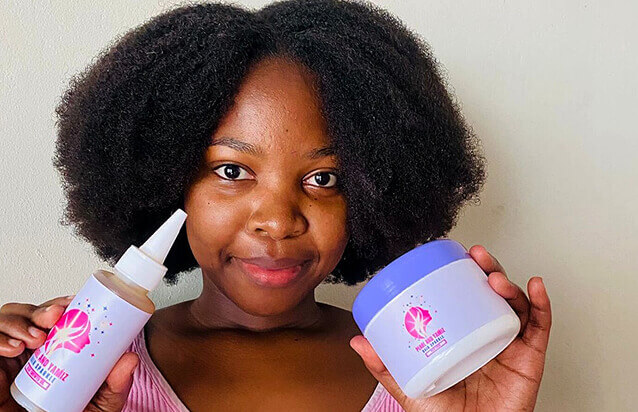
Customer holding Pearl and Yamiz hair products
Creator filming styled content in a studio kitchen

Styled creator content

Trusted for their taste

  • Professional creator with a curated feed
  • Often gifted or paid to feature a product they may not use regularly
  • Posts to an audience that follows their aesthetic
  • Visually consistent, brand-safe material
  • Strongest at awareness and discovery
The distinction matters because the trust transfer is different. A creator's audience trusts their taste. A customer's network trusts their judgement. In Q4, when purchase intent is high and scepticism is equally high, judgement outperforms taste.

How proximity drives trust more than production value

Proximity is the mechanism that makes customer voices convert. A recommendation from someone in your WhatsApp group, your neighbourhood, or your stokvel carries a weight that no production budget can replicate.

WhatsApp group icon

Your WhatsApp group

Private, high-trust, daily contact.

Neighbourhood community icon

Your neighbourhood

Local groups and suburb chats.

Stokvel community icon

Your stokvel

People whose money decisions you already trust.

In financial services (where scepticism is high and decisions are personal), proximity beats reach. The same principle applies in FMCG, automotive, and every category where consumers want reassurance from someone who mirrors their own circumstances.
Production value signals brand investment. Proximity signals lived experience. Q4 buyers respond to the latter because they are making decisions under time pressure, not browsing for inspiration.

04 - The process

How theSalt turns a brief into verified human proof

theSalt removes the friction between your brief and a credible consumer audience. The process runs in six verified steps on a single platform, and every step is visible.
1

Query by profile

Bank, mobile network, region, language, and 70+ lifestyle data points, with platform surveys confirming who already buys your product.

2

Activate matched consumers

The right people from a community of 730,000+ vetted South Africans are invited onto your brief.

3

Purchase and prove it

Consumers buy your product themselves and upload proof of receipt.

4

Use and post

They use the product in their own context, then post on their own Instagram, TikTok, Facebook, and WhatsApp groups.

5

Verify and approve

Every task is verified. Content is approved against your brand guidelines, with more than 90% approved first time, while the words and the setting remain the consumer's own.

6

Amplify the strongest

The best pieces are amplified with paid media, so the credibility travels further than a single feed.

< 2 weeks

From signed brief to live activation, which puts customer proof in market well before Black Friday on 27 November.

05 - Mid-funnel

Where customer voices work in mid-funnel

Mid-funnel is where consideration happens. The prospect knows your brand exists and is now evaluating whether to trust it enough to act. Customer voices serve this stage by answering the questions that brand content cannot.

Where each type of content does its best work

Creator content earns attention. Customer voices earn the decision.

Top of funnel

Awareness

Mid-funnel

Consideration

Bottom-funnel

Conversion

Styled creator content

Visually consistent, brand-safe material that performs well for awareness and discovery.

Customer voices

Answers "does this work for someone like me?" with specificity no brand copywriter can match.

Customer voices

The final proof point that tips a decision from "interested" to "purchased".

In Q4, the journey from consideration to conversion shrinks from weeks to days, so these two stages carry the most weight.

Does this product work for someone like me?

That is a mid-funnel question. A verified consumer posting about their genuine experience with your product answers it with a specificity that no brand copywriter can match. When that post reaches a prospect organically, through the consumer's own feed or WhatsApp group, it arrives alongside posts from people they know, which reinforces its credibility.
For South African marketers running mid-funnel retargeting in Q4, consumer generated content outperforms branded creative because it reduces the trust gap at the exact moment the prospect is deciding whether to click through.
Customer holding flavoured water bottles
Customer holding Epi-max product in bathroom
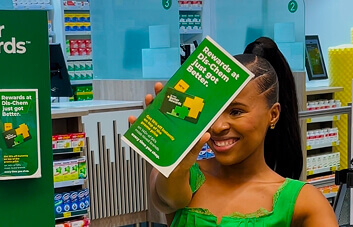
Customer holding Dis-Chem rewards brochure in store

06 - Bottom-funnel

Where customer voices work in bottom-funnel

Bottom-funnel is the conversion layer. Here, customer voices function as the final proof point that tips a decision from "interested" to "purchased".
10.12x

Verified consumers, timed from payday to payday

When theSalt activated verified consumers for a QSR brand across a six-week payday-to-payday window, the campaign delivered 10.12x ROAS.
Timing the activation to payday put real customers' recommendations in front of prospects when they had money to spend, so social validation and buying intent arrived at the same moment.

Quick service restaurant 6-week window payday to payday

What 10.12x ROAS means

Ad spend
R1
Return
R10.12

Every R1 of ad spend returned R10.12 in revenue.

The six-week window

W1
W2
W3
W4
W5
W6
Payday
Payday

Live from one payday to the next, so recommendations landed when wallets were full.

The mechanism is straightforward. A prospect sees someone from their own demographic endorsing a product they are already considering. The recommendation removes the last layer of hesitation. In Q4, when purchase windows are narrow, that is the gap that decides the sale.

07 - Paid amplification

Why customer content still works when you pay to amplify it

Proximity explains why customer content works inside the poster's own network. Once you put paid media behind it, it reaches people who have never met the poster. It still outperforms brand creative there, for three reasons.

Inside that outer ring, three things keep customer content ahead of brand creative.

It looks native to the feed

A real person filming in their own kitchen, car, or taxi queue looks like the content around it, so it reads as a post rather than an ad and earns the first few seconds of attention that polished creative often loses.

It carries detail a brief cannot fake

Existing buyers talk about what matters in real use: what it costs at their local store, how long it lasts, what their family thinks of it. Those details are exactly what a prospect is checking for before they buy.

It mirrors the audience seeing it

Because consumers are matched to your brief by profile, the person in the amplified post looks and sounds like the prospect it is served to. The viewer may not know them, but they recognise them.

That stranger-but-similar trust is the same trust peer reviews run on, and it is why customer content does not need multiple exposures to earn credibility.

08 - Your next move

What South African marketers should do before Black Friday

Q4 media buying gets expensive. CPMs on Meta and Google increase as every brand in the market competes for the same eyeballs, and Black Friday pushes them to their peak. The marketers who win Q4 are the ones who have their content library ready before then.
1

Pick the products that need proof

Identify which products need customer proof in market before Black Friday. Activate your consumer advocates now, so you have a bank of verified, approved content ready to deploy when paid-media costs peak.

2

Run a pilot activation first

Test which customer segments produce the highest-performing content for your category. Review case studies from comparable brands to set your benchmarks.

3

Measure, then scale

Measure sentiment scores, approval rates, and organic reach against your KPIs, then scale what delivers.

4

Build paid around customer content

Build your paid-amplification plan around customer content, not brand creative. When media costs rise, content that already carries trust converts at a lower cost per acquisition.

Family enjoying a meal outdoors with product in frame
Consumer holding CeraVe products
Consumers with product in front of Umtata Kitchen backdrop

In conclusion

Customer advocacy is your Q4 conversion advantage

Q4 does not reward the biggest production budget. It rewards the brand with credible proof already in market. Customer voices, activated and verified through infrastructure rather than aesthetics, carry trust that styled creator content cannot replicate under time pressure.
theSalt gives you the operating layer to move from brief to verified human proof, backed by 730,000+ vetted South African consumers matched to your brief by profile, not by follower count. The content they produce is yours to amplify, and every result is measured against the KPIs you set.

730k+

Vetted South African consumers in the community.

70+

Lifestyle data points used to match consumers to your brief.

90%+

Of content approved against brand guidelines first time.

Want customer proof in market before Black Friday?

09 - FAQs

FAQs about customer voices in Q4 marketing

Why are customer voices more effective than influencer content in Q4?

Customer voices carry peer-level trust that influencer endorsements do not match at the point of purchase. In Q4's compressed timelines, buyers need credible proof from someone like them, not a sponsored post from a stranger. theSalt activates consumers who already buy your product in their day-to-day life, so the trust is built into the content from the start.

How quickly can a customer advocacy activation go live?

theSalt moves from signed brief to live activation in under two weeks. The platform matches consumers by profile, verifies their purchases, and approves content against your brand guidelines before it posts. That means there is still time to have customer content live well before Black Friday on 27 November.

What is the difference between customer generated content and influencer content?

Customer generated content comes from someone who already buys the product in their everyday life. theSalt confirms this through surveys on its platform, then verifies the activation purchase with proof of receipt. The person posting shares their genuine experience with their own network. Influencer content typically starts with a brand gifting or paying a creator to promote a product they may not use regularly. theSalt focuses on the former, activating customers rather than renting reach.

Does customer content still work when it is amplified with paid media?

Yes. Amplified customer content looks native to the feed, carries real-use detail that scripted creative lacks, and features someone who mirrors the audience it is served to. Because the content already carries trust, it needs fewer exposures to convert, which matters most when Q4 media costs are at their highest.

How does customer advocacy support mid-funnel consideration?

Mid-funnel prospects are evaluating whether to trust your brand. Verified customer content answers "does this work for someone like me?" with specificity that brand creative cannot match. theSalt delivers this content from consumers matched to your brief by demographics, lifestyle, and purchasing behaviour, so it resonates with your target audience.

What should marketers do now to prepare for Black Friday and the festive season?

Start building your customer content library now, before media costs peak. Run a pilot activation to identify which consumer segments produce the highest-performing content for your category. Measure results against your KPIs, then scale. This preparation ensures you have verified, trust-bearing content ready when Q4 competition intensifies.

If you're not in the conversation, you're still being talked about.

Your next campaign is already in theSalt's network

More than 730,000 real South Africans, profiled, verified and ready to talk about brands they genuinely connect with. With theSalt Activate, customer voices are accessible at a speed and price point that changes what is possible.

Albert Makoeng
Albert Makoeng
Albert is a seasoned performance Influencer Marketing expert with 16 years of experience in marketing, media, digital advertising & sponsorship. Albert has held senior positions at DStv, BBC, ESPN and led teams across 20 African markets.